



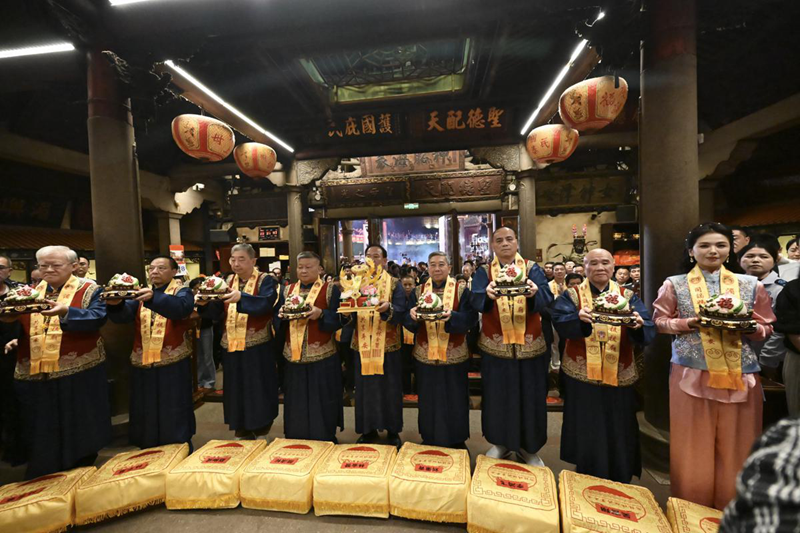
People gathered on Meizhou Island, the sacred ancestral home of the sea goddess Mazu, in Putian, Fujian province, on the night of May 8 to count down to the anniversary of her birth. [Photo provided to chinadaily.com.cn]
A grand ceremony was held on Meizhou Island, the sacred ancestral home of the sea goddess Mazu, in Putian, Fujian province, on May 9 to mark the 1,066th anniversary of her birth.
The celebration of the Mazu spirit brought together representatives from cultural institutions, overseas Chinese, and guests from Hong Kong, Macao, and Taiwan, alongside prominent entrepreneurs and thousands of devotees from around the world.
Mazu was a fisherwoman who sacrificed herself to save others and is regarded as a cultural symbol of mutual assistance, peace, and shared heritage among many Chinese people.
Liu Bingqing, vice-chairman of the Thai-Chinese Chamber of Commerce, said, "Mazu remains an unbreakable lifeline connecting overseas Chinese to their ancestral home."
"She is not only a treasure for the Chinese people but a spiritual wealth that can benefit all humanity."
Early settlers on Taiwan brought the Mazu custom to the island from Fujian, and the tradition remains vibrant today.
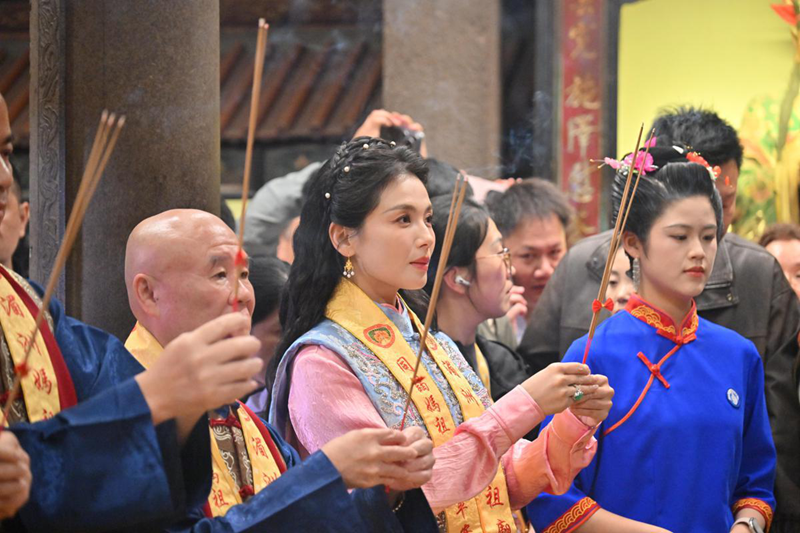
People gathered on Meizhou Island, the sacred ancestral home of the sea goddess Mazu, in Putian, Fujian province, on the night of May 8 to count down to the anniversary of her birth. [Photo provided to chinadaily.com.cn]
Lin Chin-chang, chairman of the Taiwan Lin Clan Association, said that the island is currently experiencing a craze for Mazu, with temples across the region hosting celebrations.
"Mazu is a vital bond for cross-Strait kinship," Lin said, citing the famous nine-day Dajia Jenn Lann Temple pilgrimage as a hallmark of this devotion.
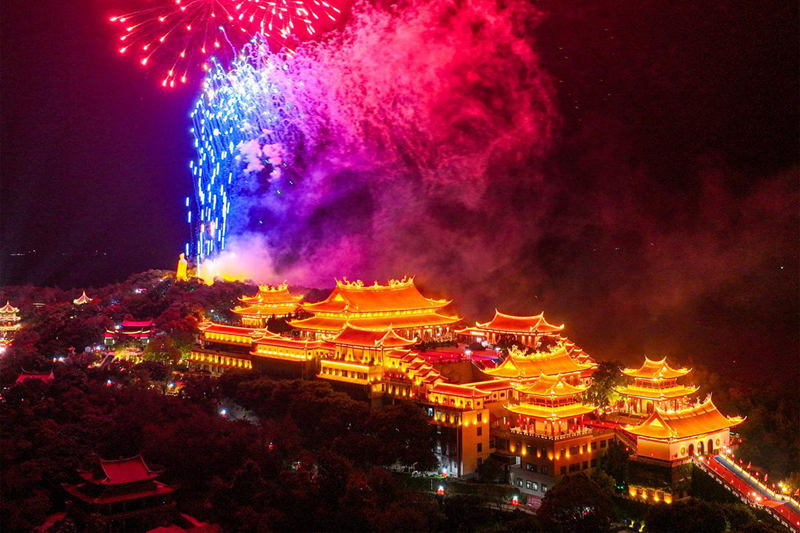
People gathered on Meizhou Island, the sacred ancestral home of the sea goddess Mazu, in Putian, Fujian province, on the night of May 8 to count down to the anniversary of her birth. [Photo provided to chinadaily.com.cn]
He added that the practice of Mazu customs in Taiwan serves as undeniable evidence of shared roots: "I hope we people use kinship to bridge divides and promote integration for the well-being of all compatriots," he said.
Mazu belief and customs were inscribed on the UNESCO Representative List of the Intangible Cultural Heritage of Humanity in 2009. Today, there are more than 300 million Mazu followers in 50 countries and regions worldwide.

Copyright © General Office of Fujian Provincial People's Government
Website Identification Code 3500000049Registration Number: 15003084
All rights reserved. The content (including but not limited to text, photo, multimedia information, etc) published in this site belongs to fujian.gov.cn.
Without written authorization from fujian.gov.cn, such content shall not be republished or used in any form.
